
Family-run microcement specialists · 10+ years experience · London & Home Counties · Premium quality · Competitive value
Micro Concrete Countertop London
Kitchen & worktop guide

Micro Concrete Countertop London

A micro concrete countertop is a practical way to create a seamless concrete-style work surface without installing a heavy solid-concrete slab. Eco Microcement uses thin, hand-applied surface systems over suitable stable bases, with preparation, edge detailing and sealing specified around everyday kitchen or bathroom use.

Family-run specialist team 10+ years experience Real projects photographed Competitive value
Overview Technical Process FAQs Contact
Quick answer

Micro concrete countertops are finished surfaces, not structural concrete slabs.

A micro concrete countertop is a practical way to create a seamless concrete-style work surface without installing a heavy solid-concrete slab. Eco Microcement uses thin, hand-applied surface systems over suitable stable bases, with preparation, edge detailing and sealing specified around everyday kitchen or bathroom use.

The original Eco Microcement article explained the appeal of refreshing an existing countertop rather than replacing every part of a kitchen. That remains the most useful way to think about the application: keep a sound base where appropriate, prepare it correctly, then create the new appearance with a thin decorative system.

This approach can reduce demolition, avoid the weight of a new cast-concrete worktop and make it easier to coordinate the surface with microcement flooring, splashbacks or walls. The important limitation is that a countertop receives concentrated wear. Heat, sharp objects, standing water, oils, acids and cleaning products all place more demand on the finish than a decorative wall.

Experience & accountability Reviewed by the Eco Microcement installation team

Guidance is based on the company’s published service information, more than a decade of specialist installation experience and completed project work. Final specification remains project-specific.

Specification

What matters before the first coat.

A visually simple worktop needs careful preparation because edges, cut-outs and high-use zones concentrate stress.

Stable base

The existing worktop must be rigid and well supported. Flexing or movement below a thin finish can lead to visible cracking or loss of adhesion.
Edges & cut-outs

Sinks, taps, corners and exposed edges require deliberate detailing. These areas experience repeated water contact and mechanical wear.

Protective sealer

The sealer should be selected for the intended use. It provides the working surface protection and needs appropriate curing and aftercare.

Typical process

From existing worktop to seamless finish.

  1. Assess the substrate. Check rigidity, joints, damage, moisture and edge condition.
  2. Prepare and prime. Clean, abrade or prepare the surface using the system appropriate to the substrate.
  3. Reinforce where required. Joints, vulnerable edges or substrate transitions may require reinforcement or additional preparation.
  4. Apply the decorative layers. Multiple thin coats are hand-applied and sanded to create the selected texture.
  5. Seal and cure. The protective finish is applied and allowed to cure before normal kitchen or bathroom use.
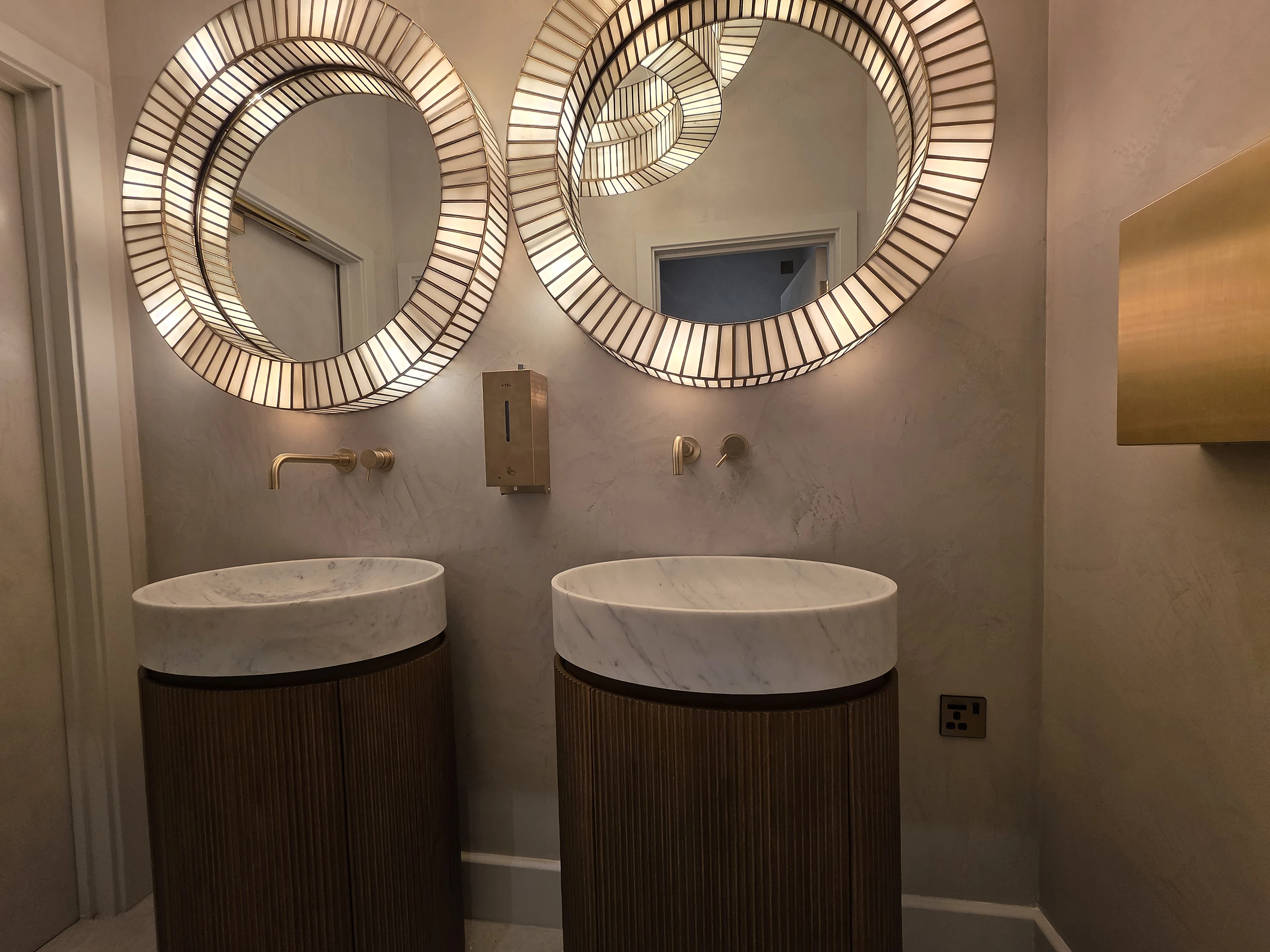
Real Eco Microcement vanity and horizontal surface project
Real client project photography showing a finished microcement bathroom setting.
Everyday use

Protect the finish you paid for.

Use chopping boards, trivets and soft cleaning materials. Wipe spills promptly. These simple habits reflect the aftercare advice historically published by Eco Microcement and help protect the sealer from avoidable damage.

Best suited to
  • Kitchen worktops and islands with stable bases
  • Bathroom vanity tops
  • Selected bar and counter surfaces
  • Refurbishment projects where replacing the base is unnecessary
  • Projects seeking a continuous concrete-style finish

The phrase is commonly used for a countertop with a thin microcement or micro-concrete style finish over a stable base. It is not normally a solid poured-concrete slab; the decorative system is applied over a suitable substrate and then sealed.

Often, yes, if the worktop is rigid, stable and suitable for preparation. Loose laminates, movement, damaged edges, moisture problems or unsuitable substrates need to be resolved before coating.

It should not be treated as a heat-proof surface. Use trivets or heat pads for hot cookware because concentrated heat can damage the protective finish.

No. Use a chopping board. Direct cutting can mark the sealer and the decorative surface.

Use a soft cloth and a mild, non-abrasive cleaner appropriate to the final sealer. Wipe spills promptly and avoid aggressive scourers or harsh chemicals unless the system manufacturer confirms they are suitable.

Discuss your project
with the family team.

Send the location, approximate area, photographs of the current surface and what you want to achieve. The team can then advise on suitability and the next step.

Contact Us →
Contact Us